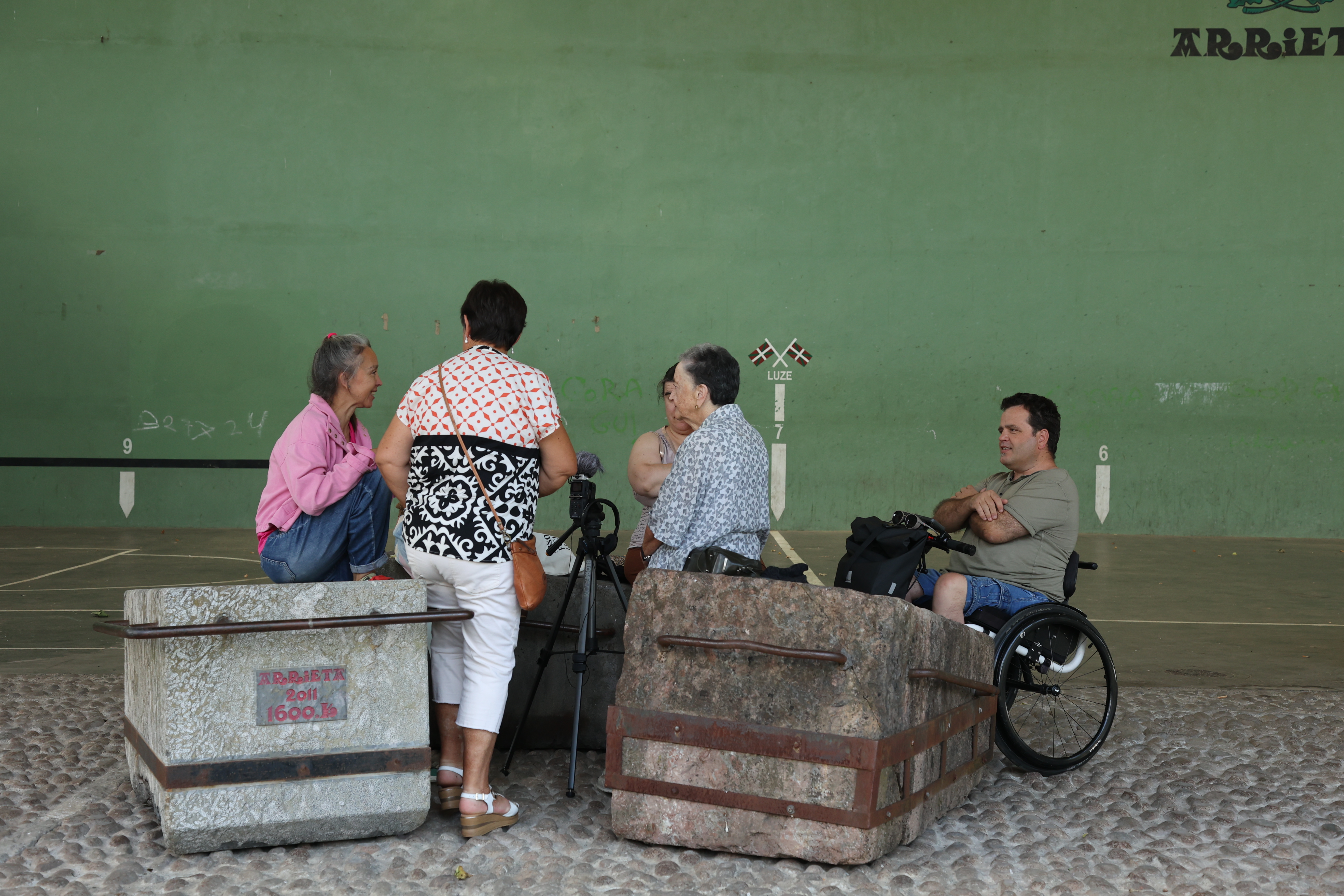
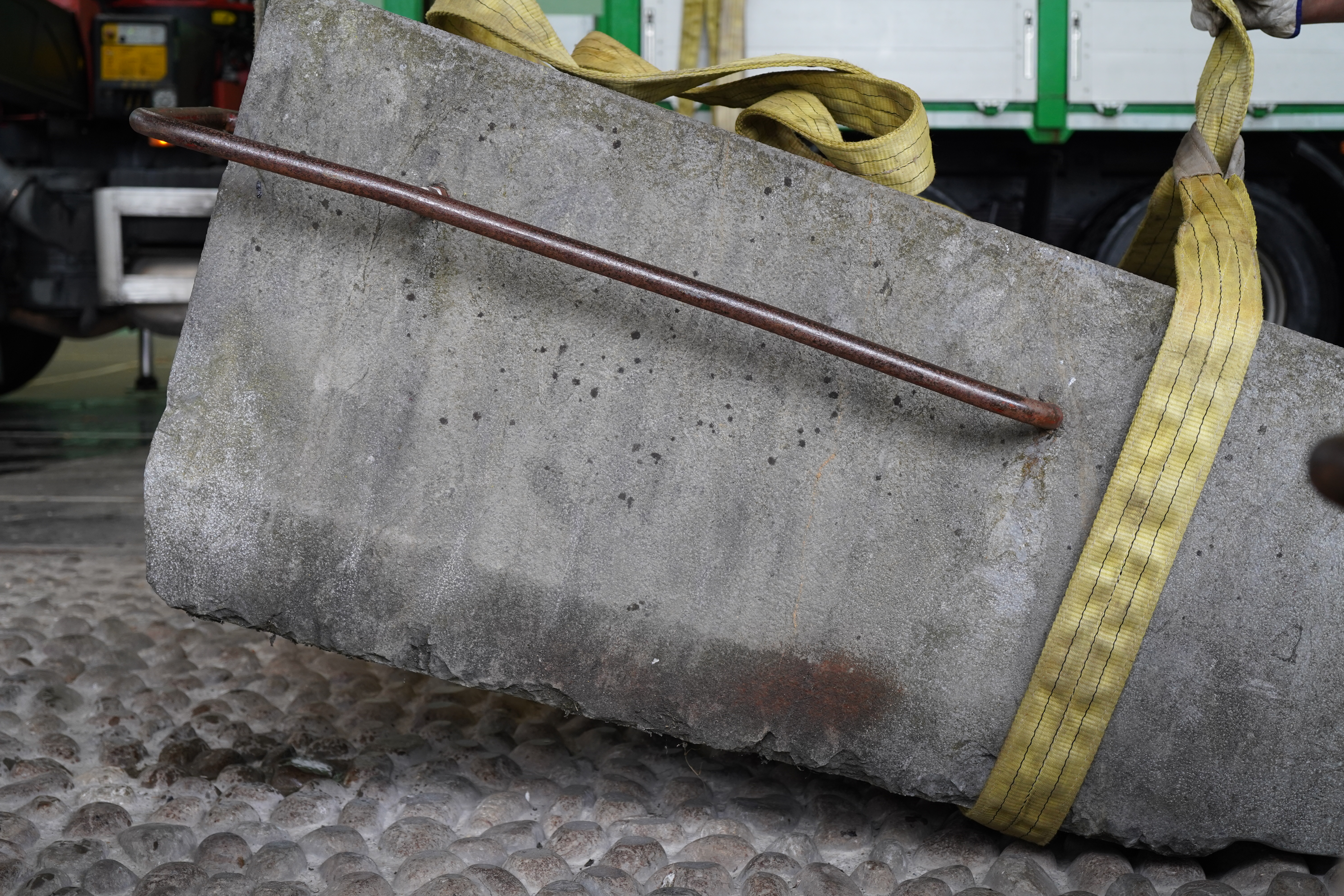
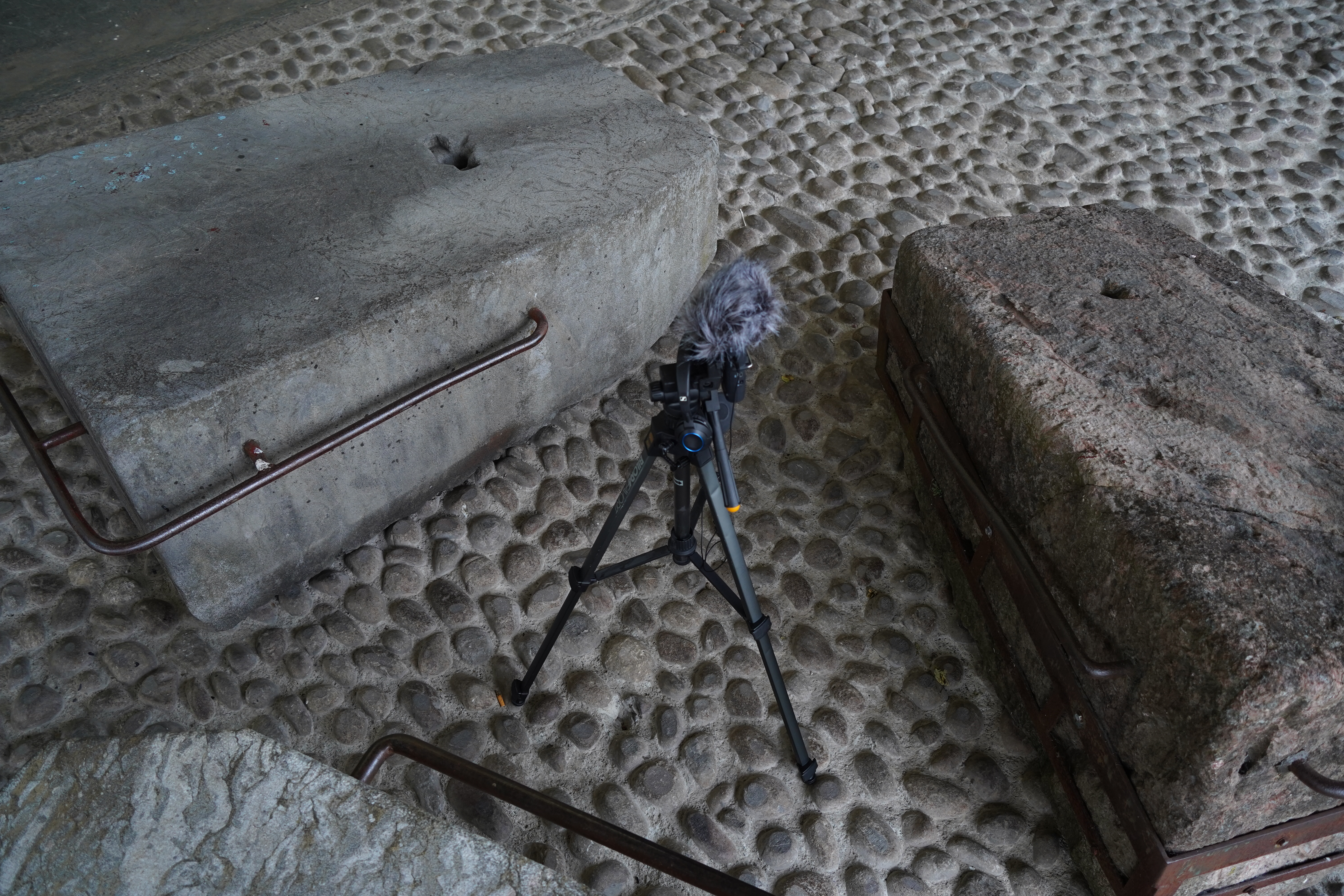
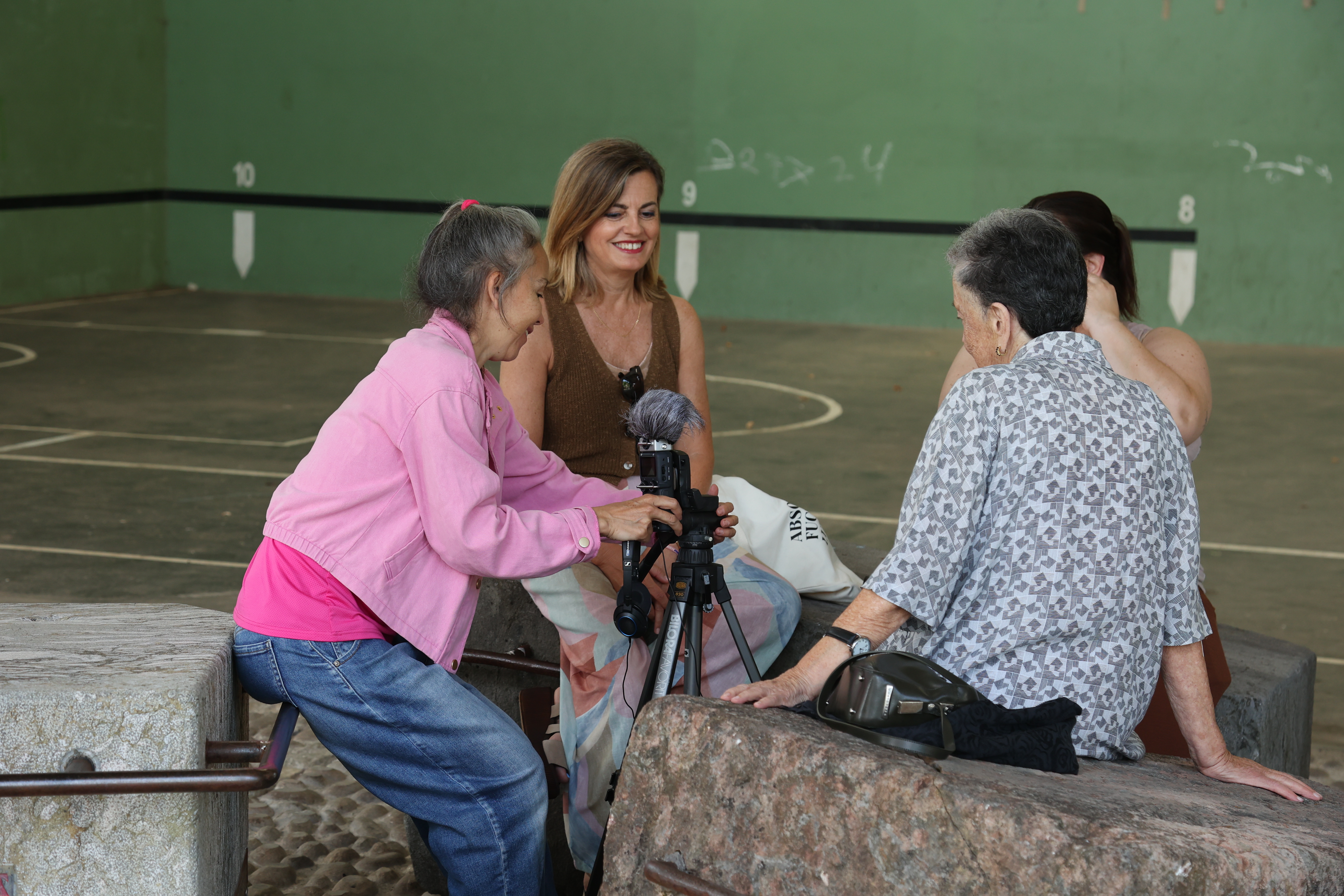
Saioa Olmo’s intervention is located in the carrejo – the forecourt of the municipal fronton, where three traditional ox-dragging stones have been deliberately relocated from their usual position within the grounds. At designated times throughout the exhibition, this installation functions as a meeting point for conversations with local residents and visitors about the perceptions, expectations and implications of establishing a contemporary art biennial within the rural context of Arrieta.
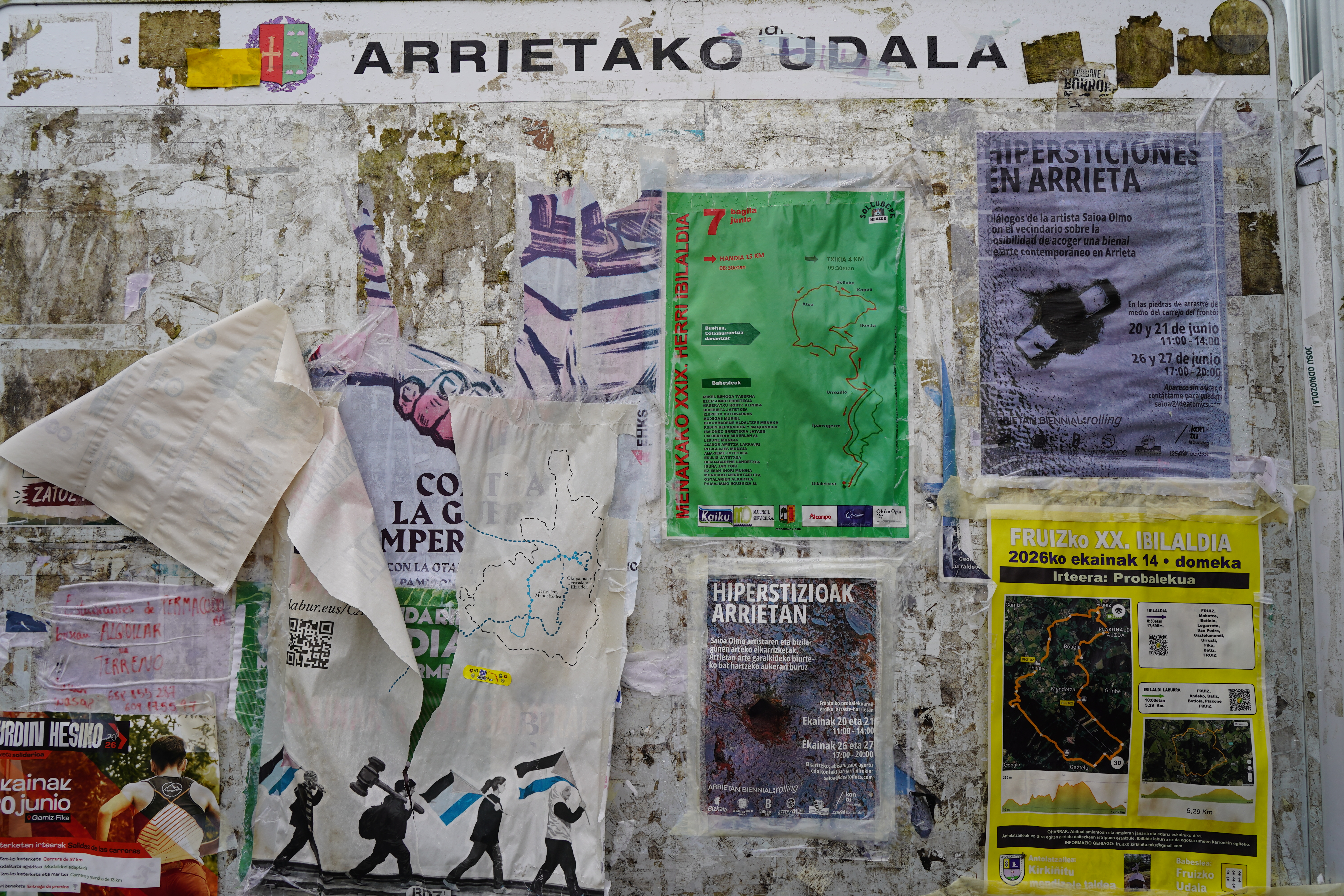
This social research project is entitled Hyperstitions in Arrieta. Its theoretical framework draws upon the concept of hyperstition, understood as a functional belief that acts as a catalyst for reality – that is, a fiction or collective idea which, once systematically imagined and embraced by a community, ultimately materialises and produces tangible effects within a given territory. Methodologically, the work is both process-based and performative. Throughout the exhibition it operates as an open gathering space at specific times, encouraging public participation. These conversations are audio-recorded, allowing the community’s spoken testimonies to gradually shape and constitute the work in real time. In this way, the project becomes a living artwork that grants agency to the social fabric of the community, while its findings also function as a qualitative diagnosis and a strategic resource for the curatorial team in the conceptual development of future editions of the biennial.
Saioa Olmo (Bilbao, 1976) is an artist, researcher, and art professor at the University of the Basque Country. She develops an artistic practice that experiments with participatory and collaborative processes, as well as relational technologies of behaviour, communication, and organization.
Her projects often take the form of performative group actions, relational devices that estrange the everyday, collective construction processes, guided walks, interactive installations, audiovisual formats, and dialogic encounters.
She has developed lines of work around collective identity and territory (the projects Euskadi™, Vuelven las Atracciones, and Transnacional), gender and feminism (the projects Wiki-historias and those carried out with Plataforma A and Pripublikarrak), and mechanisms of desire (Deseos Indisciplinados, La Casa del Mago, and Eromecánica). She is currently working on interaction with future generations (Susurrando el futuro), exchanges between diverse agents (Conversando con el Parque de Doña Casilda and Fuimos nosotras), and relational technologies (Transarte).